
CHINA
A Travel Guide for First-Time Visitors
Highlights, Iconic Landscapes, Itineraries & Essential Tips
Welcome to China
China is a country that resists quick description. Within its borders you can walk a 20,000-kilometre stone wall strung along mountain ridges, descend into a warren of 600-year-old imperial palaces, cruise a river through limestone peaks that have inspired painters for a thousand years, and then, in a single afternoon, stand beneath a skyline that did not exist two decades ago. It is home to the world's largest population, some of its oldest continuous history, and landscapes so dramatic they have doubled for other planets on film.
For a first-time visitor the scale is part of the adventure. Distances are large and languages are unfamiliar, but the country is extraordinarily safe, its transport is modern and efficient, and its people are overwhelmingly hospitable to travellers. This guide picks the highlights that reward a first trip and tells you how to see them well.
Before You Go
Visa & Entry
Most nationalities need a visa before arrival, applied for through a Chinese embassy, consulate or authorised visa centre. Many visitors are eligible for a 240-hour (10-day) visa-free transit when passing through major cities such as Beijing, Shanghai and Chengdu en route to a third country, which makes a short first visit remarkably easy. Always check current rules closer to departure, as policies change. Carry your passport at all times; it is needed for hotels, trains and ticketed sites.
When to Go
The finest all-round window is spring (April to May) and autumn (September to early November), when skies are clear, temperatures are pleasant and the landscapes are at their best. Summer (June to August) is hot and rainy nationwide and peak domestic holidays are crowded; winter is cold in the north but ideal for snowy mountains and cheaper prices. Avoid the national Golden Week holidays around 1 October and early February if at all possible.
Getting Around
China's high-speed rail network is the best way to cover ground comfortably. Bullet trains connect Beijing, Xi'an, Shanghai, Chengdu and Hangzhou at up to 350 km/h, city centre to city centre. Book tickets a few days ahead with your passport; major stations and platforms are signposted in English. Within cities, the metro is cheap, clean and extensive, and ride-hailing apps are simple to use.
Money & Connectivity
Cash is increasingly rare. Most travellers use international cards through mobile payment apps, and major hotels, airports and tourist sites accept foreign cards or cash. Having some renminbi on hand for small stalls is still useful. Buy a local SIM or data eSIM on arrival, and download a translation app and an offline map before you go; internet restrictions mean Google services can be unreliable without a familiar workaround.
The Highlights
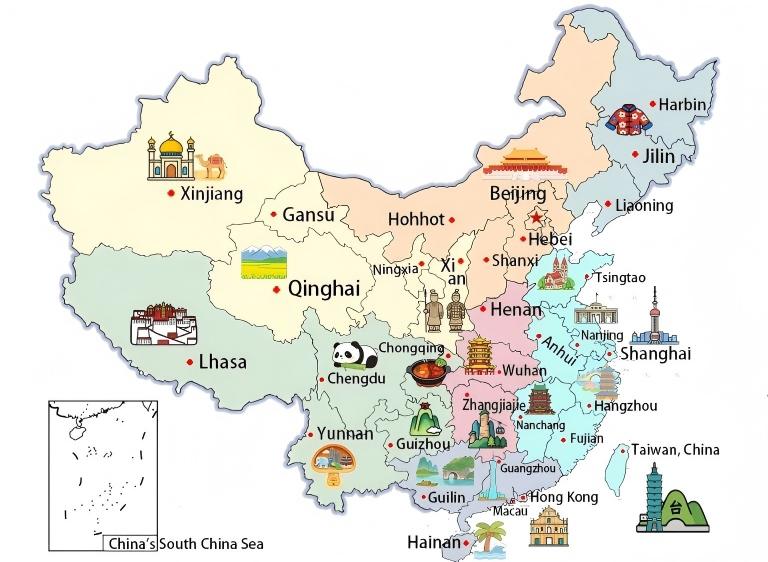
The eight destinations below form a classic first trip. They cover ancient history, living cities, wildlife and the landscapes China is famous for, and they line up neatly along the high-speed rail corridor.
Beijing — The Imperial Capital
Beijing is where every first China trip begins. Forbidden City-style red walls, lantern-lit hutong alleyways and the Great Wall on the northern hills give it a weight no other city can match. Start with the wall, then spend a full day inside the palace complex.
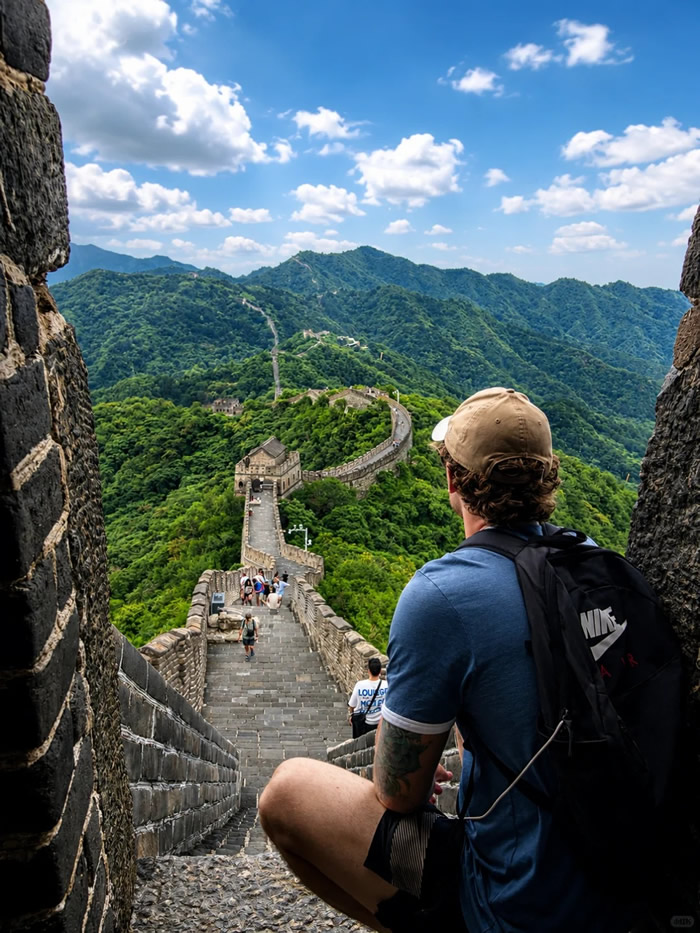
No single image sums up China better than the Great Wall. Rather than the crowded Badaling stretch, head to Mutianyu or Jinshanling, both an easy day trip from the city. Here the wall climbs and dips along ridges of green, with watchtowers at every turn; in autumn the hills turn gold and red, and in winter snow softens the stone.
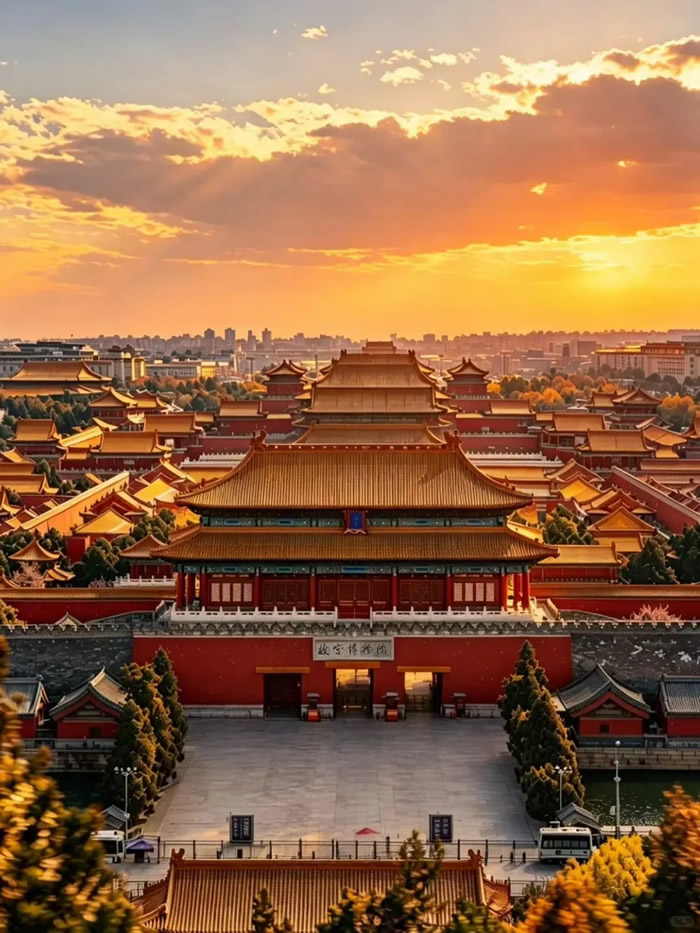
The Forbidden City, a vast rectangle of courtyards and golden-roofed halls in the heart of Beijing, was home to emperors for nearly 500 years. Enter through the Meridian Gate and walk north along the central axis past the Hall of Supreme Harmony. Outside the palace, watch the circular mounds of the Temple of Heaven, wander the tree-lined lakes at dusk, and eat Peking duck at a traditional restaurant.
Xi'an — Gateway to Ancient China
Xi'an was the eastern terminus of the Silk Road and the capital where China was first unified. Its reason for being on every itinerary sits just outside town.
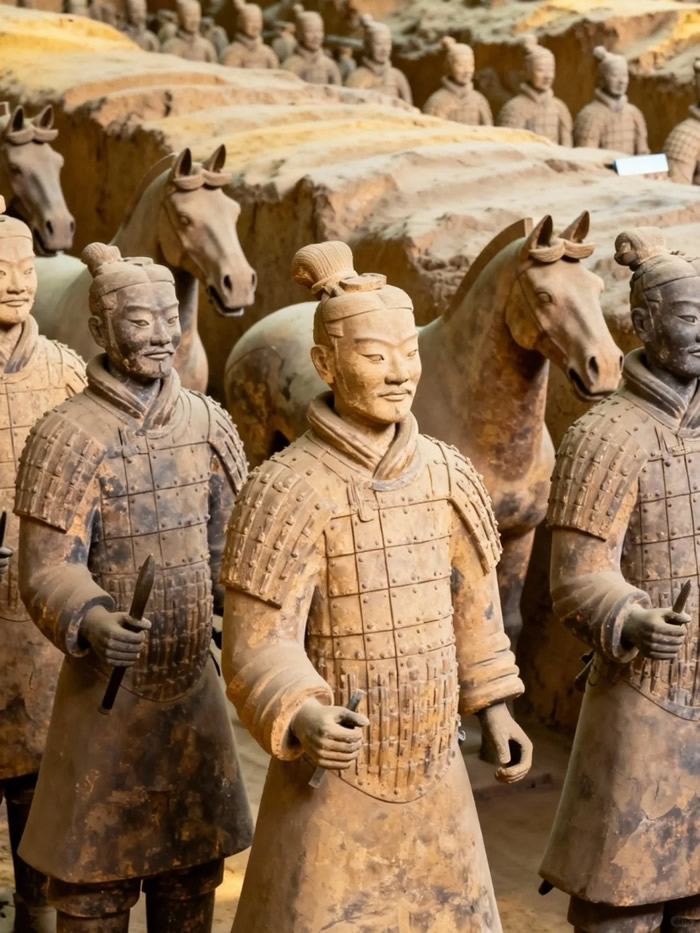
The Terracotta Army is one of the archaeological wonders of the world. In three vaulted pits, thousands of life-sized warriors — archers, infantry, cavalry and chariots — stand in silent formation, each face individual, created over 2,200 years ago to guard the tomb of Emperor Qin Shi Huang. Back in the city, rent a bike and loop the intact Ming-era City Wall at sunset, then lose yourself in the lantern-lit, food-stall lanes of the Muslim Quarter.
Shanghai — Where East Meets West
A two-hour flight east from the ancient capitals, Shanghai feels like another country. It is China at its most modern and its most romantic, a city of art-deco waterfronts and vertiginous towers.
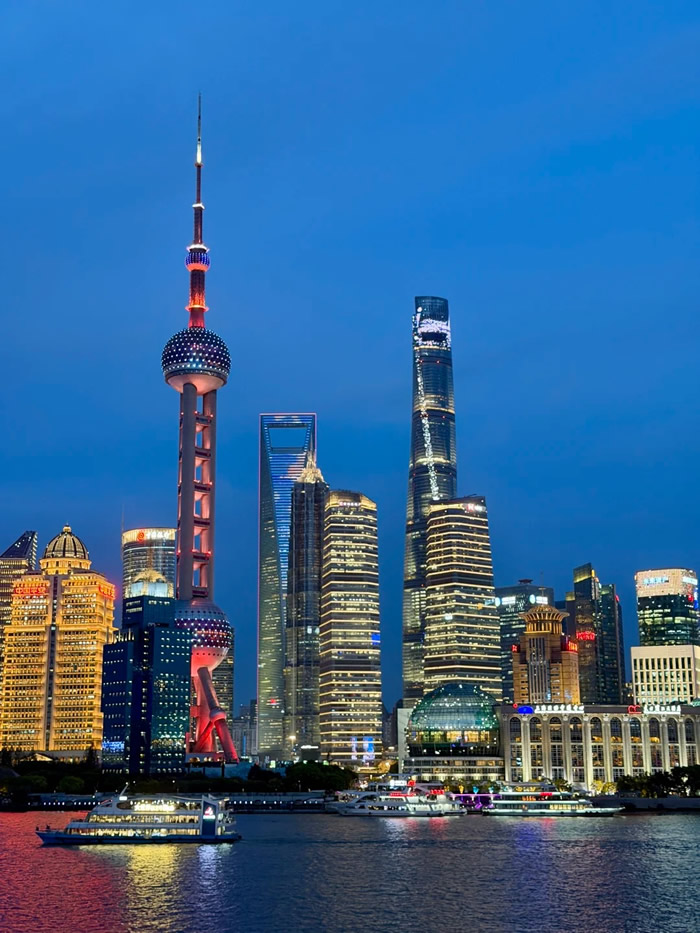
Walk the Bund at golden hour and again after nightfall, when the Pudong skyline across the river lights up in pink and gold. Cross to climb the Shanghai Tower for the best observation deck, then spend a lazy afternoon in the tree-lined lanes of the former French Concession and the classical Yu Garden. Shanghai is also the country's best food city for dim sum, soup dumplings and fusion cooking.
Chengdu — Pandas and Slow Living
Chengdu runs on tea-house time: bamboo groves, mahjong tables and extraordinarily spicy food. It is also the place where visitors come face to face with China's favourite animal.

The Chengdu Research Base of Giant Panda Breeding is the world's best place to see giant pandas at close range, cubs and all — arrive early, before the midday heat sends them to sleep. Pair it with the fiery pleasures of Sichuan hotpot and mapo tofu, and a day trip to the 71-metre-high Leshan Giant Buddha carved into a riverside cliff.
Guilin and Yangshuo — Landscape Postcard
The jagged green peaks and mirror-still rivers of Guangxi are the scenery on Chinese scroll paintings and the old 20-yuan banknote. This is China's most photographed landscape, and it looks better in person.
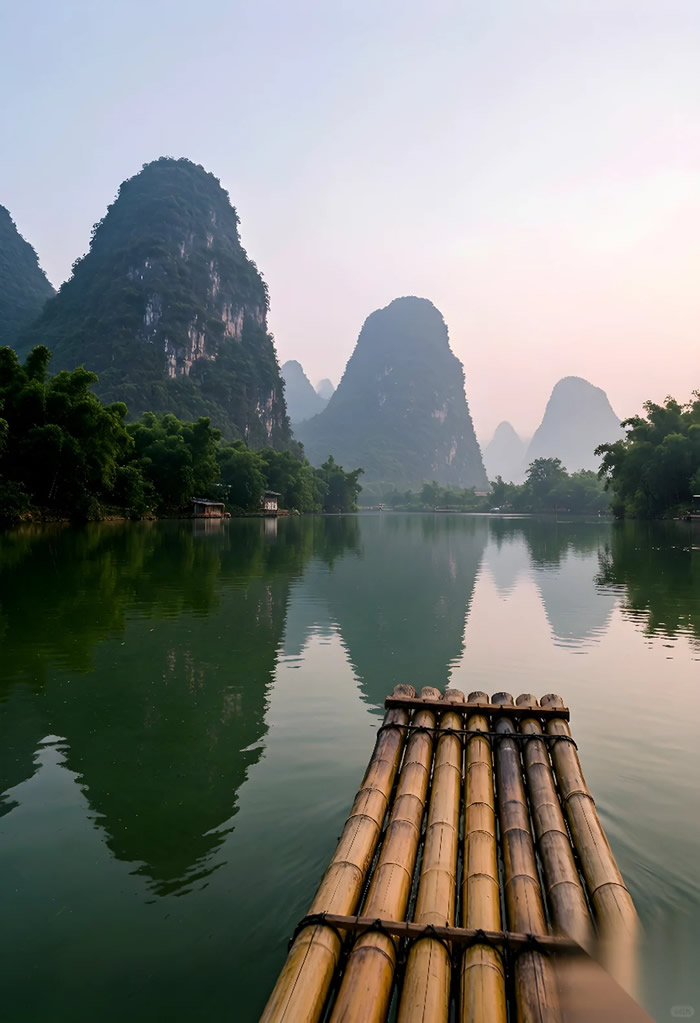
Take the day-long Li River cruise from Guilin down to Yangshuo, drifting past cone peaks, bamboo banks and water buffalos on the shore. In Yangshuo, rent a bicycle along the Yulong River, float on a bamboo raft, and watch the night show of lights on the karst hills. The slow, green countryside is the perfect counterpoint to the big cities.
Hangzhou — Paradise on Earth
Marco Polo called Hangzhou the most splendid city on earth, and a mill later its West Lake still lives up to the saying that there is heaven above and Suzhou and Hangzhou below.
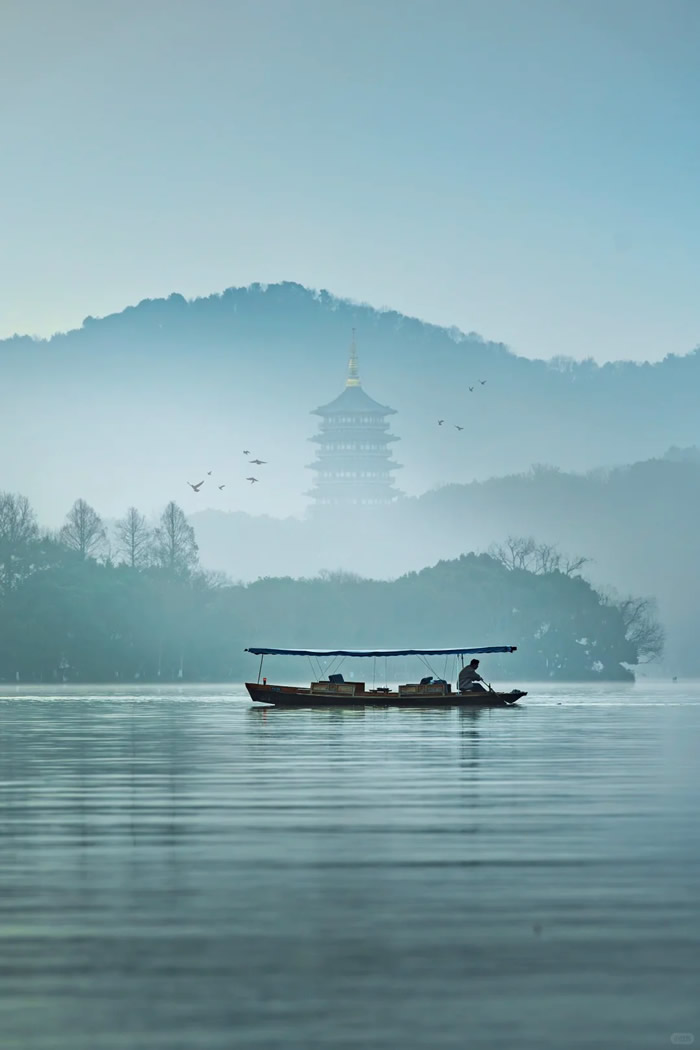
Rent a boat on West Lake, walk the willow-lined causeways at dawn, and climb to a pagoda for views over the water and misty hills. Hangzhou is the home of Longjing (Dragon Well) green tea, and a visit to a hillside tea plantation is the city's quiet luxury. It sits on the high-speed rail line just 45 minutes from Shanghai.
Zhangjiajie — The Floating Mountains
When filmmakers needed mountains that float in the sky, they came here. Zhangjiajie's forest of quartz-sandstone pillars rises straight out of the valley in a way that seems physically impossible.
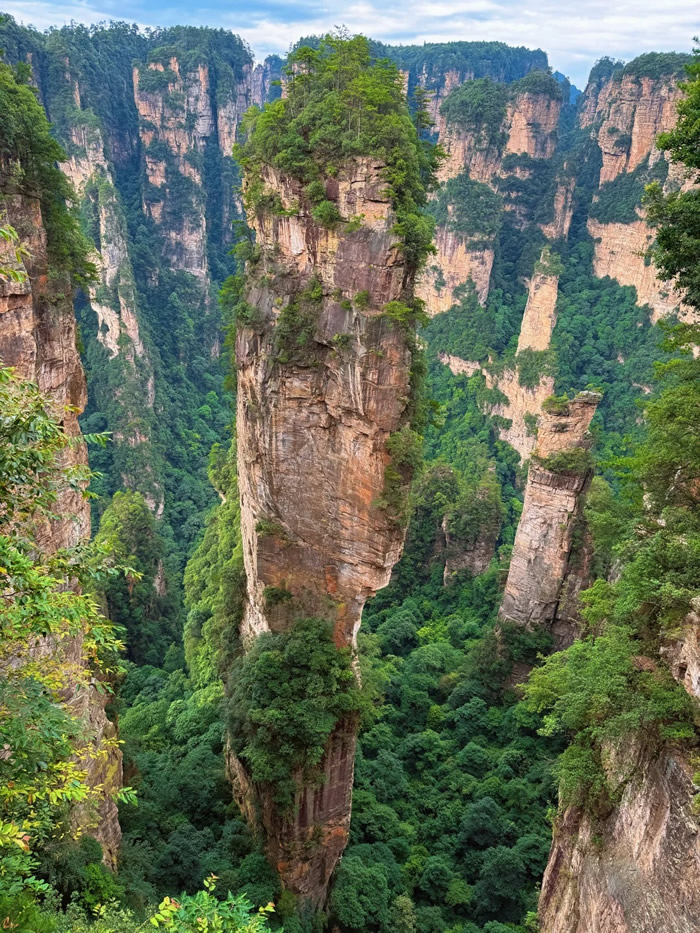
Hundreds of narrow rock towers, draped in pines and wrapped in cloud, fill the Wulingyuan valley. Glass lifts carry you to the summits, cliffside walkways trace the edges, and the world's highest and longest glass bridge spans the gorge below. Go on a clear morning, when the mist lifts off the pillars.
Huangshan — The Yellow Mountain
Huangshan is the mountain that taught Chinese art how to see. Its gnarled pines, granite peaks and legendary 'sea of clouds' are the template for every classical landscape painting in the country.
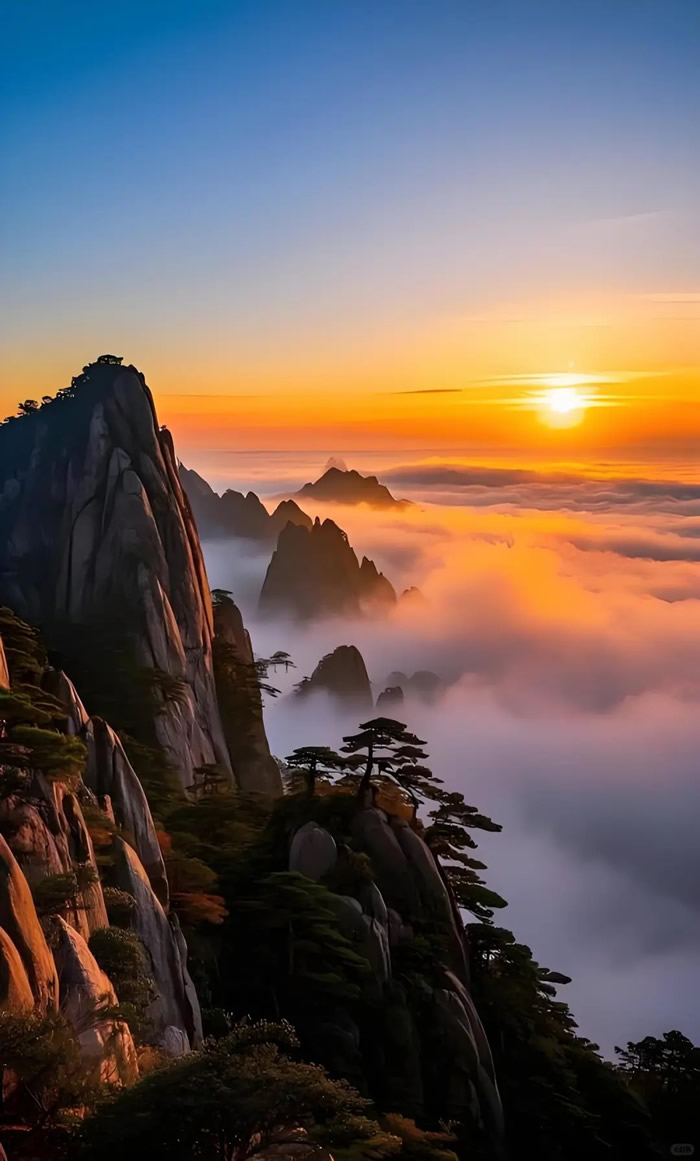
Stay overnight on the mountain to catch sunrise from a lookout above the cloud. Walk the ridge trails between bizarre rock formations and welcoming pine trees, then soak your legs in a hot spring on the way down. Spring wildflowers and autumn maples are especially fine, but a dusting of winter snow is unforgettable.
A Classic First-Trip Itinerary
For roughly ten to fourteen days, this loop threads the greatest hits together along the high-speed rail network. Adjust length to suit your time.
Days | Base | Highlights |
1–3 | Beijing | Great Wall at Mutianyu; Forbidden City, Temple of Heaven, hutongs; Peking duck |
4–5 | Xi'an | Terracotta Army; Ming City Wall cycle; Muslim Quarter food |
6–7 | Chengdu | Giant pandas; Sichuan hotpot; optional Leshan Giant Buddha |
8 | Guilin / Yangshuo | Li River cruise; bamboo raft and cycling in Yangshuo |
9–10 | Shanghai | The Bund by night; Yu Garden; French Concession; dim sum |
11–12 | Hangzhou | West Lake boat and causeways; Longjing tea hills |
Food You Must Try
Chinese regional cuisine is a highlight in itself rather than fuel between sights. Order what locals order and share family-style.
· Peking duck (Beijing) — lacquered roast pancakes with cucumber, scallion and sweet bean sauce.
· Xiaolongbao (Shanghai) — delicate soup dumplings; sip the broth first.
· Sichuan hotpot (Chengdu) — cook fresh ingredients in a bubbling, numbing chilli broth.
· Dim sum and yum cha (Guangzhou / Shanghai) — steamer baskets of dumplings and buns.
· Street food (Xi'an Muslim Quarter) — lamb skewers, roujiamo 'Chinese burgers' and fresh noodles.
· Longjing tea and Hangzhou home cooking, light, fresh and lake-fed.
Etiquette and Practical Tips
· Tipping is not expected and can be refused; hotels may add a service charge instead.
· Carry your passport — it is required for train tickets, hotel check-in and many sites.
· Book popular sites (the Forbidden City, pandas, Terracotta Army) online in advance with your passport; same-day entry is often sold out.
· Use the metro and official taxis or ride-hailing apps; agree on a fare or insist the meter run with unlicensed touts.
· At temples and monasteries, dress modestly (cover shoulders and knees) and ask before photographing people.
· Tap water is not generally drinkable; bottled water is cheap and everywhere.
· Learning a handful of phrases — ni hao (hello), xiexie (thank you), zaijian (goodbye) — goes a remarkably long way.
China rewards curiosity. Move slowly, let one unplanned tea-house afternoon lead the day, and let the contrast between ancient and modern, mountain and metropolis, do the work. The highlights are unforgettable; the moments between them are what you remember.