Furong Ancient Town: A Town Hung Over a Waterfall
Nestled on the cliffs above the You River in western Hunan, there is an ancient town that seems to hang right over a thundering cascade. For over two thousand years, locals called it Wangcun — the Village of Kings. Today, the world knows it as Furong Ancient Town.
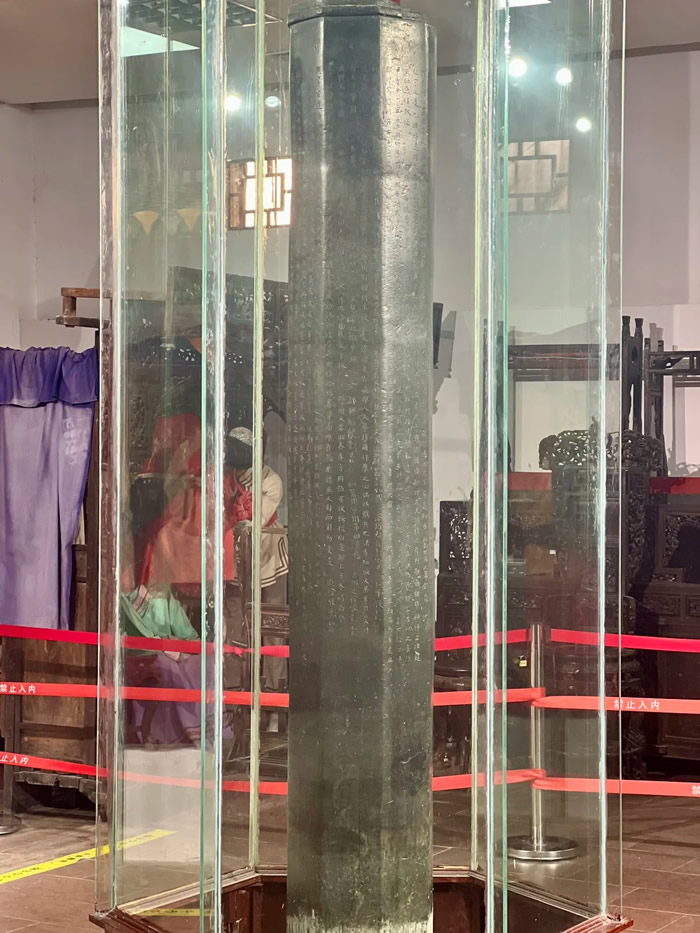
Long before it drew travelers from afar, it was the political heart of the Tujia chieftain kingdom, the very first capital of the Xizhou Tusi regime that ruled this land for 818 years. Perched at a vital crossroads of waterways, it linked Sichuan and Hubei upstream and stretched down to the Dongting Lake downstream. Boats loaded with salt, tea and timber crowded its docks; merchants and porters filled the flagstone lanes. The five-li stone street, worn smooth by centuries of horse hooves and cart wheels, still bears the faint grooves of all that busy history. Here stands the Xizhou Bronze Pillar, carved with 2,614 characters, marking the treaty that gave birth to the Tusi governing system — a silent monument to a whole era.
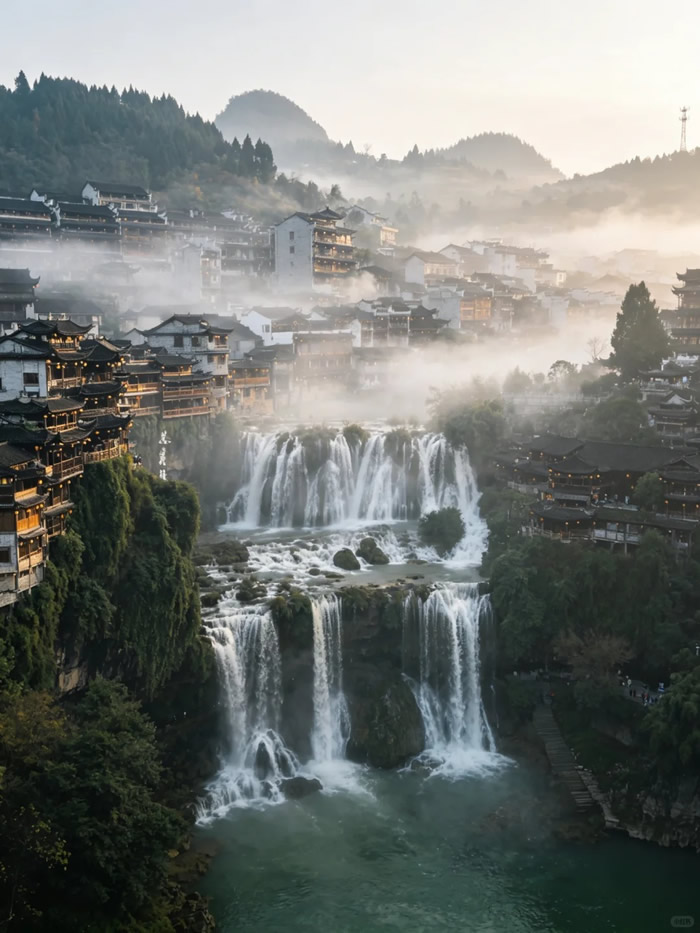
Yet what makes this town unlike any other is the waterfall that cuts right through its heart. Locals name it Dragon Salute Fall: 60 meters tall, 40 meters wide, crashing down the cliff in two roaring tiers. In the rainy season, its thunder echoes for miles; in quieter days, it falls like strands of silver thread. Row upon row of Tujia stilt houses cling to the cliff face, their wooden balconies hanging right above the mist. Open a window, and you can feel the fine cool spray on your face. Step behind the falling water, and you enter a natural curtain cave, quiet and echoing, as if the mountain itself has tucked away a secret.
For centuries, this town remained hidden deep in the mountains, known mostly to traders and locals. That changed in 1986, when director Xie Jin wandered across western Hunan searching for a filming location. He chose this unspoiled old town for his classic film *Hibiscus Town*. The story of ordinary lives through turbulent years touched audiences across the country, and it put this small town on the map forever. The little rice tofu stall from the film still stands on the old street, carrying that cinematic memory into the present. It was after this film that Wangcun slowly took on a softer, wider-known name: Furong, the hibiscus.
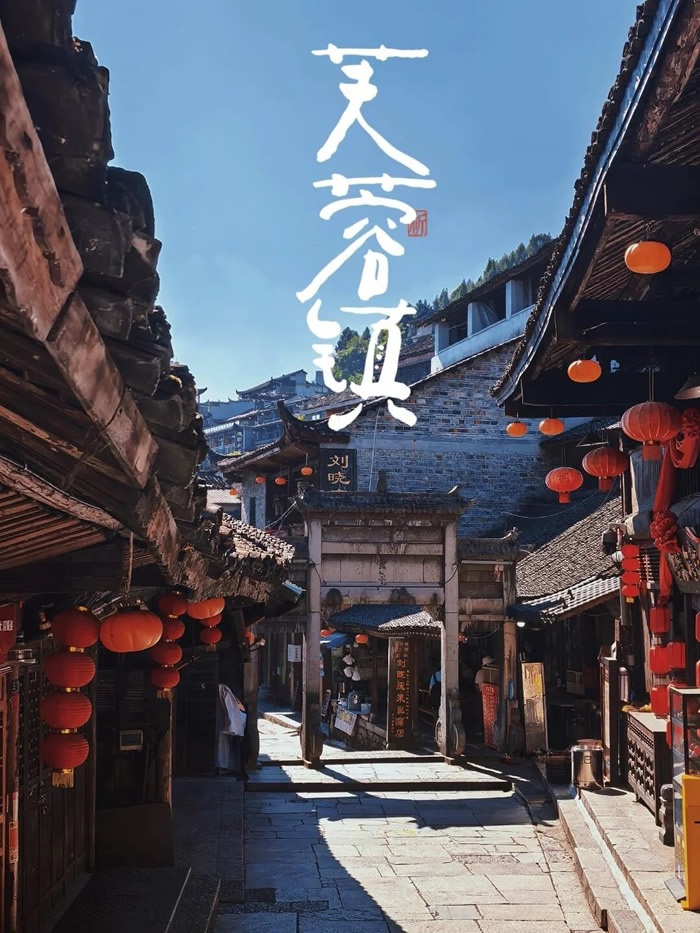
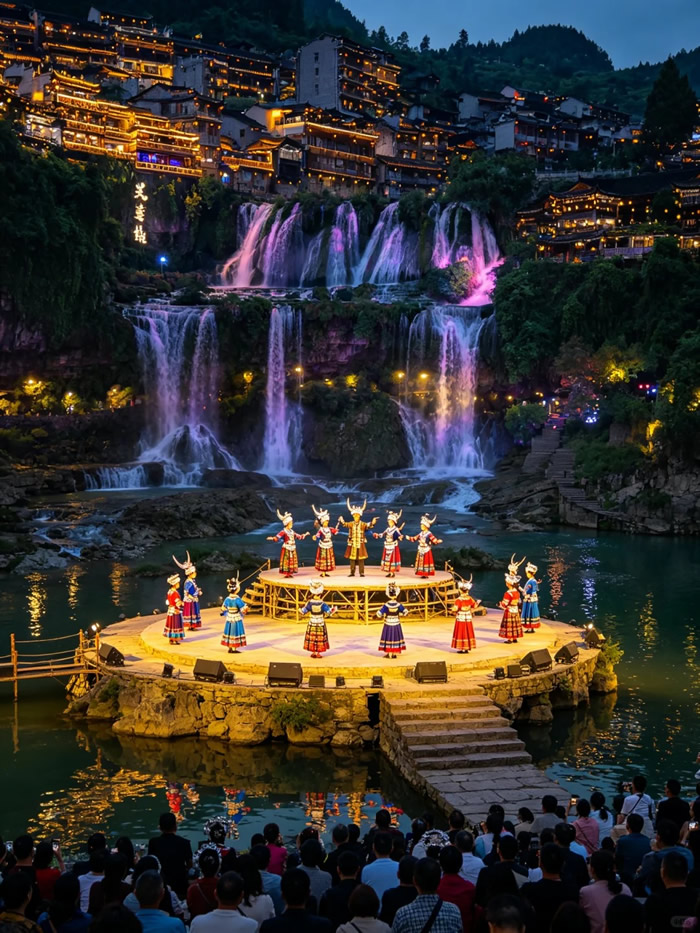
When night falls, the town slips into another kind of magic. Red lanterns glow along the stilted wooden houses, and colored lights spill over the waterfall, turning the rushing water into streams of glowing purple and gold. The roar of the cascade mixes with the clink of bowls from food stalls and the soft drift of Tujia folk songs.
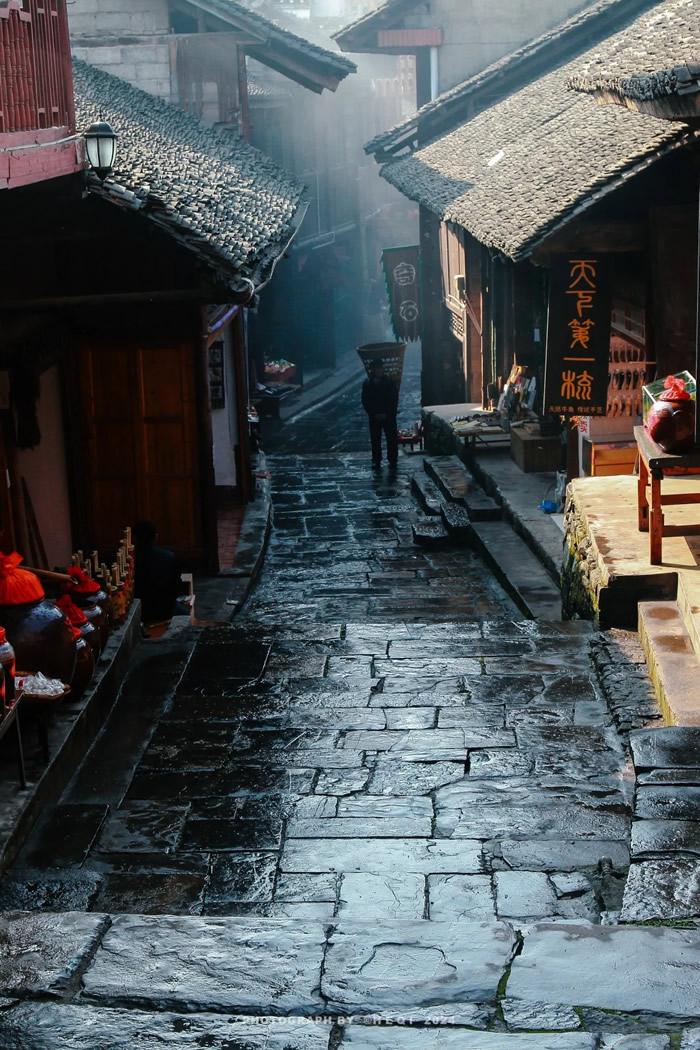
Furong is more than a collection of old buildings. It is a place where the waterfall has roared for centuries, where generations have lived, traded and told their stories. Every flagstone holds a footprint of the past, and every wooden window frames a view that feels both timeless and quietly alive.